Thursday, March 1, 2012

Make Lifestyle Changes


SANS THE SODA
I have always been a big water and milk drinker. But, with everything going on in my joints, I made a personal choice to stop drinking cola based sodas.  Basically, we all know that there is nothing healthy in sodas (who hasn't heard of that Battery Acid + Coke science project?), and research shows that bone loss can be related to drinking them. So, I decided not to take the risk. My condyles need all the help they can get! Not drinking soda has been pretty easy for me. I do have one cup of coffee every morning, and when I'm occasionally in the mood for a Diet Dr. Pepper, I enjoy a caffeine free Diet Ginger-ale, Diet Sprite, Izze, Sparkling Mineral Water, or Tea instead.

Soda + Osteoporosis: The Cola Connection 
New research indicates that there may be more to the soda and osteoporosis connection than simply replacing the good stuff with the useless stuff. Researchers at Tufts University, studying several thousand men and women, found that women who regularly drank cola-based sodas -- three or more a day -- had almost 4% lower bone mineral density in the hip, even though researchers controlled for calcium and vitamin D intake. But women who drank non-cola soft drinks, like Sprite, didn't appear to have lower bone density.
Possible Culprits: Phosphoric Acid, a major component in most sodas, may be to blame, according to lead study author Katherine Tucker, PhD. Phosphorus itself is an important bone mineral. But if you're  getting a disproportionate amount of phosphorus compared to the amount of calcium you're getting, that could lead to bone loss. Another possible culprit is Caffeine, which experts have long known can interfere with calcium absorption. In the Tufts study, both caffeinated and decaffeinated colas were associated with lower bone density. But the  caffeinated drinks appeared to do more damage. {WebMD}

EAT ORGANIC
About four years ago, when my health started to deteriorate, I began eating as many organic and non-processed foods as possible. I truly think it makes you feel better, and I believe in the lifestyle! Below are several Reasons to Go Organic

    1. Organic Is the Only Alternative Delivering Meaningful Health Results.

    It is hard to miss the problems arising in the wake of the conventional food system–toxic exposures, birth defects, learning disabilities, obesity, water pollution, and unacceptable suffering by farm animals, to name a few. While dozens of labels promise often undefined and unverified benefits, the certified organic label stands apart in consistently delivering what people care most deeply about–more nutritious food, grown using methods that minimize the use of toxins, while building soil quality and protecting water quality. A growing, dynamic organic food sector will stimulate valuable changes benefiting all of agriculture, as well as everyone dependent on the American farmer for three square meals a day.

    2. Reduce Your Exposure to Harmful Synthetic Pesticides.

    Conventional farmers apply 2-12+ synthetic pesticides to their crops. The average serving of conventionally grown leafy greens, peppers, tree fruits, berries, and grapes contains three to four pesticide residues. Residues of some widely used pesticides can trigger subtle changes in a child’s development, and may lead to a wide range of health problems including ADHD, autism, obesity, and certain forms of cancer.

    3. Boost the Nutritional Quality of Your Food.

    Organic crops are grown in healthier, biologically active soils. While crops on organic farms tend to yield somewhat less per acre and often take longer to grow than crops on conventional farms, plants nurtured by soil on organic farms produce crops that contain higher levels of important antioxidants, minerals, and vitamins.

    4. Decrease your Intake of Unnecessary Hormones and Antibiotics.

    Most conventional livestock farmers use a combination of growth hormones, drugs, feed supplements, and high-grain diets to push their animals to grow faster, get bigger, and produce more milk and eggs per day. In fact, animals on conventional farms are often pushed so hard that they experience serious reproductive and/or other health problems leading to heavy antibiotic use. The National Organic Program (NOP) rule prohibits the use of virtually all synthetic animal drugs. At the end of the day, healthy animals produce healthier meat, milk and dairy products, and eggs.

    5. Give Farm Animals a Healthy Measure of Respect.

    A significant share of the livestock raised on conventional farms live in crowded, stressful conditions that erode animal health, increase drug dependency, and take away any chance of carrying out natural behaviors. However, the NOP rule states that organically raised animals must have access to the outdoors, including pasture, and ample space to carry out natural behaviors.

    6. Improve Water Quality and the Safety of Drinking Water.

    Rainfall landing on a field of crops will carry a certain amount of soil, nutrients, and chemicals downstream or into underground aquifers. The more chemicals applied per acre, the greater the challenge in preserving water quality. The Dead Zone in the Gulf of Mexico is the most graphic example of the enormous harm caused when farm chemicals flowing off of millions of acres congregate in the mighty Mississippi.

    7. Organic Food Delivers More Intense Flavors.

    Organic fruits and vegetables more often than not have higher levels of flavor-enhancing nutrients, coupled with lower concentrations of water and sugars. The end result–typically more intense and complex flavors. Plus, no artificial food colors or preservatives are added to any organic foods. 
When you have to make a choice, here's a Fruit + Veggie Cheat Sheet...


Remember, always buy organic + free range eggs, dairy, and meat products!


If you're looking for delicious Recipes, which you can prepare regularly for others, and puree for yourself, you'll love Squash Blossom Babies.  Are you looking for nutrition information on the purpose and benefits of Super Foods? View Super Food For Thought. I'm always collecting recipes and adding them to my Soft Foods folder on Pinterest. {Just so you know, while you're browsing my recipes, I don't eat Mammals. Why you ask? Oh, because of a sweet little pet calf named Tulip, who thought she was a dog.}


TAKE A SEAT
I got a new Office Chair!


Some people recommend that it would be beneficial to sit on an exercise ball instead of a chair. This is based on the theory that the abdominal and back muscles are constantly engaged and active in order to maintain proper posture and balance on the ball. There is no scientific evidence of those benefits occurring by just sitting without performing additional exercises, but since I'm also doing Pilates, Physical Therapy exercises, walking and running, I thought I would give it a try. I'll keep you posted.

THEN, GET UP AND WALK 


PAY ATTENTION TO YOUR BODY 


1. Less Is Best
I agree with the National Institutes of Health (and TMJ Hope!) who say, “Less is often best in treating TMJ Disorders”. You would be wise to explore your safe, conservative, reversible and cost-effective options before making any permanent changes to your bite, undergoing surgery, or spending exorbitant sums of money. {I tried the Less Is Best approach for 4 years before having surgery}

2. Posture
I feel that trying to treat your head, neck and jaw without addressing your posture would be like giving you a car without any tires. If your posture is out of balance or alignment, it can adversely impact your jaw, neck and head. You need to address your posture in sitting, standing and sleeping. My patients with the worst jaw joints are often those who sleep on their stomach or on their side with their hand or arm pressing on their face. Try sleeping on your back. You could benefit from seeing a specialized orthopedic physical therapist to help you evaluate your posture and alignment. Many patients with TMJ Disorders don’t realize they have loose joints and hyperextend their knees. If your joints are loose you need to learn to unlock your knees and protect and stabilize your joints including your jaw.

3. Tongue
If your tongue works and rests correctly, it can help you separate your teeth and relax your jaw. Your tongue should gently rest along the roof of your mouth like when you make a “cluck” sound. If your tongue wants to push against your front teeth at rest, in speech or swallowing, you likely need to tone and retrain it, on your own, with your PT, or with a speech language pathologist specially trained in tongue thrust and swallowing disorders.

4. Swallowing
You swallow between 500 and 2,000 times a day. If you are swallowing incorrectly you may be contracting muscles that shouldn’t have to be on the job and thrusting your tongue every time you swallow. Learn to be a swallowing superstar.

5. Breathing
Breathing should be through your nose and diaphragm and is normally 12-16 breaths per minute. Most of the patients I see are rapid chest breathers. Learning to breathe can also calm muscles and help you switch gears from a stressful “fight flight” to a restful relaxed state.

6. Teeth Apart
Your teeth should only touch momentarily when you swallow in the back. Otherwise they should never touch. Common postures and even medications can cause clenching.

7. Lips Together
“Our Lips are Sealed” is not only a song, but a healthy way to help your jaw relax and keep your tongue gently suctioned on the roof of your mouth. Some people have short upper lips and have difficulty closing their lips. These people can benefit from some stretches and exercises to make it easier.

8. Calm Your Muscles and Your Mind
Tight and tender muscles are one of the biggest contributors to headaches, neck pain and jaw disorders. Muscles can even cause headaches, ear pain, dizziness, ringing in the ear, and even tooth pain (along with jaw pain!). It is critical you gain a better understanding of what irritates and relaxes your muscles. Our minds and physical bodies are intricately connected. Mental stress and a nervous system that is stuck in high gear must also be managed.

9. Avoid Over-Opening
Yawning is only one of the activities that can cause you to over open your jaw. Try keeping your tongue on the roof of your mouth as you yawn to stop you from opening too far. Understanding the basic anatomy of your jaw joints, how they work and how to care for them is vital for success.

10. Avoid Extra Pressure on Your Jaws
Just like your shoes wear out the more you run around in them, your jaw joints are subject to similar wear and tear. Overuse and abuse of your joints, including your jaws, can wear them down. Hurtful habits like sleeping on your stomach, resting your chin on your hand, holding the phone to your shoulder, singing, eating, excessive talking are only a few of the ways we unwittingly wear down our joints. As you learn to replace hurtful habits with healthy ones, you can set the stage for health and wellness (and hopefully, less jaw pain!).

For those of you suffering with TMJ Disorders, if you don't already know about it, I would like to introduce you to a great online site called TMJ HOPE. It has lots of helpful information, and it's where I found these great PT Tips.

Thursday, February 16, 2012

I'm Back {Month Two}


For the first time in YEARS, I feel like ME again! I didn't even realize how different I had become, until I started feeling so much better. Pain really takes the life out of you. Now, I wake up in the morning ready for the day. I don't feel groggy and grumpy. I'm not tired all of the time, and I don't feel anxious anymore. I am back to my old HAPPY-GO-LUCKY self. I feel like a huge pressure has been lifted off of me. This has been the Greatest Gift of All.

PROGRESS
Pain- My overall pain has been a Level 1. For the most part, I only have quick, sharp pains (Levels 5), when I am doing my Therabite and Jiggle exercises. This is also when I hear the cracking or cellophane noises in my ears. I am still on the number three hole on my Therabite. Once, while I was talking with my splint out, my left joint popped and hurt pretty badly. However, when these things happen, the pain comes and goes quickly.
...
Stamina- I do have to be honest, after a few hours of hanging out with friends, and trying very hard to speak clearly enough to be understood, I get exhausted and feel some pain. I try not to overdo it, because speaking and smiling a lot, with my splint banded in place, makes my masseter muscles fatigued and very sore (Level 4-5). But, resting and applying the heating pad always help. No discomfort is constant, and I am still headache free!
...
Stomach Incision- The incision has healed very well. I continue to put Mederma on it, and massage the scar tissue daily. It has flattened out a lot, and the hard tissue underneath the skin is now only about one inch in height by three inches long. I still haven't been able to wear a pair of jeans or regular pants, but I am making progress, as I am now able to lie flat on my stomach. But, to be totally honest with you, I'm loving the comfort of the Legging Lifestyle ;).

...
Ears- As for inner ear pain, I've had very little. Like the other pains I have, it is always fleeting and usually only happens when I am speaking with my splint out. I can now place the sides of my head on a pillow. I always sleep on my back, to keep the pressure off of my ears/jaw, however, if I'm on the sofa, it is not painful for me to lean my head on a pillow. The top parts of my ears are still sensitive to the touch, and they do hurt if they get cold. I also have to be careful when I'm blow drying my hair, but my ears are healing very well. Physically, no one can even believe I've had surgery, and my sideburns are growing out. 

TIP- Bundle up! I am lucky that this has been one of warmest winters on record, as the cold really makes my ears, facial muscles, and joints get sensitive. When you're out in cold weather, try not to linger too long, and be sure to wear a scarf, hat/ear band, and gloves. These items will make a big difference in how you feel. I suggest fleece for items touching your ears, because it is softer, stretchier, washable, and doesn't itch. Make sure your ear/head items are not too tight. You don't want to defeat the purpose. And by the way, there is no need to look frumpy when you bundle. Mix things up with your Scarf Style...


TIP- Once you've gotten cold, it's important to apply Moist Heat! Using my heating pad helps to relieve my facial pain. Taking hot baths also helps. Due to my lack of good circulation, my hands and feet are always cold (even in the summer). Dr. Piper explained that the blood flow and circulation in the hands and head/jaw joints are related. Thus, it is important for me to always wear gloves (even inside when needed), and stay as warm as possible.

Monday, Feb. 13th 
Dr. Piper Phone Appointment
The morning of the appointment, I faxed in my Progress Report. During our call, Dr. Piper asked how everything was going, if I was still fitting into my splint properly, if I was clenching, and about my pain levels. I let him know that I was doing very well. My splint still fits the same as it did when I was in St. Pete, I have not felt that I have been clenching at all, and, for the most part, I only have fleeting pain in my joint and facial muscles when I am talking or doing my Therabite and Jiggle exercises.

Next, he asked if I had any questions or concerns. I did. I asked him when I would be able to start running again. Dr. Piper gave me the go ahead to start back up. WooHoo! 

My only concern was that several weeks ago, I began having severe sensitivity to cold on one of my top teeth, which never bothered me before. Dr. Piper said that sometimes the bands can torque the tooth, exposing the root. He suggested that I move the band off of that tooth, and place it in a different location, until he could check on it at my 3 month appointment. This has helped a lot.

TIPS- Other things that help with my tooth sensitivity are to use a Prescription Sensitivity Toothpaste, called NeutraMaxx, which I obtained from my local dentist, to always use WARM WATER in my Waterpik and when brushing, and to use a straw when drinking cold liquids.

Thursday, Feb. 16th
45 Minute Breaks
Having a 45 minute break means for the first time since my surgery, I was able to eat outside of my home. The extended time allowed me to meet a friend at TCBY, and get home in just enough time to clean and band back up. This was a huge day, because...

It's also really relaxing to take a shower without the splint, so I don't have to worry about drowning ;). Overall, longer breaks give me so much more FREEDOM and a renewed sense of NORMALCY, which makes an enormous difference.

Friday, Feb. 17th
I'm a RUNNER again!
I've been walking a lot, but have not run since the night before my surgery, so I didn't really know what to expect. I decided to try it with Scout for the first time. I much prefer being outside in the fresh air, hearing the birds, and tackling the hills, to running at the gym. So, I bundled up and took off. 

Much to my surprise, I made it one mile before the cold air (making my nose run), and the Hoover Dam in my mouth, made it impossible to get enough air! I know it's not far, and I physically felt like I could have kept going, but the breathing was a challenge the entire time. My inability to breathe easily will be my biggest obstacle as I run. I also have to really focus on not pushing myself too hard, so I don't clench, and/or make my stomach incision hurt. 

I'm sure the people who passed me were wondering why I sounded like I had a serious case of emphysema, and looked like a puffer fish, but it felt so good to be out. No matter how ridiculous I sounded and appeared, I'm going to keep up the running (with Scout of course, and luckily she doesn't mind the noise).


Sunday, February 5, 2012

Feeling Unattractive


Once I started to finally feel better, I began to look at myself and feel ugly. I wouldn't consider myself a vain person, but I had to go through a little period of grieving, as I came to terms with my mumbled speech, the splint, and braces (which I never even had as a teenager). Everyone was excessively telling me how great I looked, and I was thinking, oh sure, I'm a regular beauty queen

The hardest part for me was the loss of feeling like I could smile freely. Out of all of my friends, I'd never been known for my eyes, hair, or perfect figure. I'm the friend with the big, happy smile. My SMILE has always been MY THING.


Don't get me wrong, I didn't feel badly about myself on the inside, or have low self esteem, I just felt sorry for myself the first few times I noticed people were staring at me, or when that horrified look crossed a store employee's face, as she tried to talk to me, and I just pointed to the splint. 

But then I thought, Christine, GET OVER YOURSELF. You aren't the type of girl who sits at home having a pity party. You are intelligent, kind, and have a loving husband, family, and friends who couldn't care less about what you look like. After about a day, I got my confidence and mojo back. I just had to come to terms with it on my own, and remind myself, that TRUE BEAUTY is something that only comes from the INSIDE.


The most therapeutic thing, for me, has been the ability to laugh at myself and joke about my "Darth Vader" mouth. Laughter truly is the best medicine. And trust me, although you'll think they do at first, nobody really cares anyway! 


P.S.- Be prepared for the thousands of comments you'll get from others wishing they could have their mouths wired shut to lose weight, or that their spouse would love it if they couldn't speak, etc. People aren't trying to be insensitive. They probably just feel really terrible for you, and don't know what else to say, as they're staring at an apparatus they've never before encountered. Ha, I tell myself, just smile and nod, Christine, smile and nod ;).

Saturday, February 4, 2012

Home at Last {Weeks 2-4}


DAY 11- Saturday, Jan. 14th
Home Sweet Home- My first weekend at home was fantastic. For the first time, I actually felt like watching movies, checking my email, and reading. I relaxed, exercised, went to church, and spent the next few days reorganizing my life. I also felt with-it enough to take over managing all of my medications and logs. This was a big step. My mom stayed with me for a few days, and before she departed, she helped me with the laundry and made double batches of lots of healthy, delicious food for us, much of which I had enough extra to freeze for later, when I didn't feel like cooking. Nutrition is a key factor in healing, so it is really important to have energy rich foods readily available to puree and eat.


WORK- I am blessed with a wonderful job that allows me to work from home (Thanks, I.O. METRO), so I didn't have to rush back to work in an office with others on Monday. I have spoken with a lot of people who have struggled immensely with going back to work right after returning home from surgery (because of the splint schedule and speaking). You are technically physically able, and cleared to do so, but talking while wearing the splint is a real challenge, and often leads to increased pain. I too, felt little bump-ups in pain when I was struggling to speak through the splint (and actually be understood). I had to make a conscious effort to monitor myself. This week I found a happy medium between exercising my muscles by speaking, and not straining them by using my newly invented "sign language" and magnadoodle board.
 ***
 My Daily Plan for Healing at Home
***
Scout was always ready for a walk, and generally, she just made me feel happy and better. I mean really, who wouldn't fall in love with her sweet face? 
Plus, medical research studies show that PETS HELP YOU HEAL.

MY WEEKLY ROUTINE
  • Walking 2 to 4 miles (at least 5 days a week)
  • Daily Physical Therapy Exercises for my Neck, Shoulders + Upper Back
  • Following the 5x/day Splint + Medication Schedule
  • No-Chew Diet- Eating Healthy Whole Foods made at Home 
  • Drinking lots of Water
  • Private Stott Pilates Lessons
  • Applying the Facial Heating Pad 
  • Using my Brookstone i-need Neck and Shoulder Pro Massager
  • Focusing on my Neck Posture while Working on the Computer
  • Outings (going to movies, museums, running errands, etc.)
  • Monitoring my Interaction with Others (so not to strain myself)
  • Using a Humidifier at Night
---


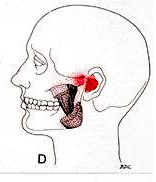
PAIN- WEEK 2: Several days after I got home, the constant ear pressure and frequent pains stopped, and I just began getting quick sharp pains occasionally. The only areas that still really hurt were the upper inner parts of my ears (photo above), the sides of my head (photo below) and stomach incision, which was still sensitive. I was sleeping much better and only woke up a couple of times in the night, or very early in the morning, from discomfort. A few times I felt as though I had been clenching, but never had any muscle spasms. I began only taking Tylenol, as needed, for pain. I also stopped taking my daily hour naps, because I was less tired, and wanted to get the best possible sleep at night.


I improved my smile to where you barely notice the braces/splint (well, if you're half blind and you just look quickly). Still, it's a huge progression from my photos right after surgery.


My stomach was healing up very well, too. On Week 3, I started rubbing Mederma Scar Gel on it four times a day. However, there was still a puckered up area of scar tissue that I was trying to get to flatten by massaging it daily.


DAY 15- Wednesday, Jan. 18th
Moved up to #3 on the Therabite
My muscles had to stretch farther than ever before, so there was some discomfort as I did my exercises. Using the heating pad afterward really helped.

DAY 16- Thursday, Jan. 19th
Phone Appointment with the Piper Clinic
The morning of the consult I faxed in my Progress Note. Since everything was going well, they just gave me some directions for my 30 minute breaks and medication changes. I asked a couple of questions and after that, the quick call ended.
TIP- When you have your first consult, you're going to have to do it on one of your 15 minute breaks. Make a protein shake/smoothie you can be drinking during the call, rather than trying to eat.


DAY 21- Tuesday, Jan. 24th
Started Weekly Private Pilates Lessons


STOTT PILATES® incorporates modern exercise principles, and applies proven and accepted practices in biomechanics, rehabilitation and athletic performance enhancement. After realizing the benefits of the concepts of the original Pilates method, and in collaboration with a team of physical therapists/physiotherapists, sports medicine and exercise professionals, the Merrithews dissected and re-connected this unique form of exercise into a comprehensive, systematic, contemporary approach to the original teachings.

STOTT PILATES exercises are designed to restore the natural curves of the spine and rebalance the muscles around the joints. This involves placing more emphasis on pelvic and scapular stabilization, and integration of all the parts of the body into one. As well, preparatory exercises and modifications allow the technique to be appropriate for many different body types and abilities, making it applicable to sport-specific training and everyday life.

FIVE BASIC BIOMECHANICAL PRINCIPLES
1.  Breathing
2.  Pelvic placement
3.  Rib cage placement
4.  Scapular movement
5.  Head & cervical spine placement

I could not ask for a better Pilates Instructor. Joetta has been such an amazing help, and has really worked with all of my limitations. I can already feel myself getting stronger!

DAY 22- Wednesday, Jan. 25th
Discontinued Relafen + 2 Front Elastics


Being able to remove two more frontal bands, also enabled a little more wiggle room in my splint, which took a day or two to get used to. Here is my newest smile with less bands...


DAY 23- Thursday, Jan. 26th
Break Times 5 times per day for 30 min.
Thirty minute breaks make all the difference in the world! If you get everything ready beforehand, as you would for the 15 min. breaks, you'll have time to make a phone call, visit with friends, or have coffee or dessert. The added time allowed me to enjoy my first cup of coffee since before surgery. Sometimes it is the little things in life that make you the happiest.
FYI- I only choose to drink clear liquids when I'm wearing my splint, so it doesn't get discolored. I really don't want it to be brown, since it is hanging around for 9 months.


PAIN- WEEK 3: Due to the combination of getting off the Relafen, 30 minute splint breaks, and increased talking, I felt a little bump-up in pain and a general tightness/achiness in the Masseter muscle in my face. Occasionally, I still got sharp ear pains, which only lasted a second, when doing my Therabite or jiggle exercises, and when hiccuping, sneezing, talking, blowing my nose, or accidentally biting my tongue, etc.
I also began to hear crackling cellophane-sounding noises in my ears when doing the jiggles, which Lisa previously told me was normal and to be expected. I had a couple of headaches (the normal people kind, not migraines), which were easily cured with Tylenol. I did not notice myself clenching when waking in the mornings, and I began sleeping through the night without waking up. Overall, my pain level was always under a Level 3. The muscle pain went away as my body got used to my new schedule.

... doing well and feeling more like myself!

4 WEEKS POST OP- Wednesday, Feb. 1st
Focusing on my Posture
I was really feeling great with regard to my jaw, ear, and facial pain levels (usually a Level 1). I had not  gotten any more headaches, and I religiously continued my daily routine (as outlined above). However, as I worked more on my computer, I began to feel that old muscular tightness and strain in my shoulders returning. I knew I had to get it under control before it started moving up my neck and getting really bad again. 

Thus, I began focusing even more intently on my posture and doing research to truly understand why poor posture was such a stress on the whole body. 


Good Posture


Once upon a time I had good posture. But, as my TMJ Disorder and chronic pain took their toll, without me even realizing it, my good posture slowly slipped away. Thus, I have to make a constant effort to think about, and correct, the way I am sitting, walking, and standing to ensure the best recovery possible.

Thursday, February 2, 2012

15 Minute Breaks

Fifteen minutes is not a lot of time to perform your Therabite + jiggle exercises, clean your splint, eat, take your medications, use the Waterpik + brush your teeth, and get the splint back in place and all banded up. You must be diligent and organized to do it five times a day within the time limit.

TIPS- Successful Splint Changes in 15 Min.
1. MEDICATION: As soon as you wake up in the morning get all of your medicines separated out, into five individual containers, for the day.


It is helpful to keep a list of what medicines you take during each splint break. This way you won't forget anything, take too many pills, or get confused.


2. SUPPLIES: Keep your hygiene and splint supplies on an organized tray in your bathroom. Have everything ready to use in a hurry. I even count out my rubber-bands beforehand, so that I can quickly get them back in. Once you've done it enough, you can band back up in about one minute.


I use three toothbrushes-- the baby toothbrush for brushing my teeth, the second for brushing my splint once I have soaked it in Efferdent (during the first morning break), and the third for brushing my splint with toothpaste (at each break), and ACT Fluoride Rinse (after the evening soak). Make sure to have hand towels and Kleenex readily available. That Waterpik loves to splatter everywhere.

3. FOOD: Prepare your meal, puree it, and have it heated and ready to eat before you take out your splint. Your spoon/straw, napkin, drink, and meds should all be set out. Be careful when you're popping in big pills, you don't want to accidentally bite down on one when you're swallowing.


4. TASKS: As soon as you unband and remove your splint, start your timer, brush your splint and then soak it if it is the first or last break of the day. Next, do your Therabite and Jiggle Exercises before eating. This way, you will be sure to get them in, and you won't hurt yourself rushing in the last seconds.


I quickly open and close the Therabite, so not to strain my muscles.


I slide side-to-side, on the tongue depressor, for my Jiggle Exercises.


5. LOG: You're not going to remember what time you complete each splint break. Since they have to be at least two hours apart, keep an ongoing log of the times you finish up.


The 15 minute breaks only last for the first 2 1/2 weeks, and then you get more time. But no matter what, STAY ORGANIZED, because...